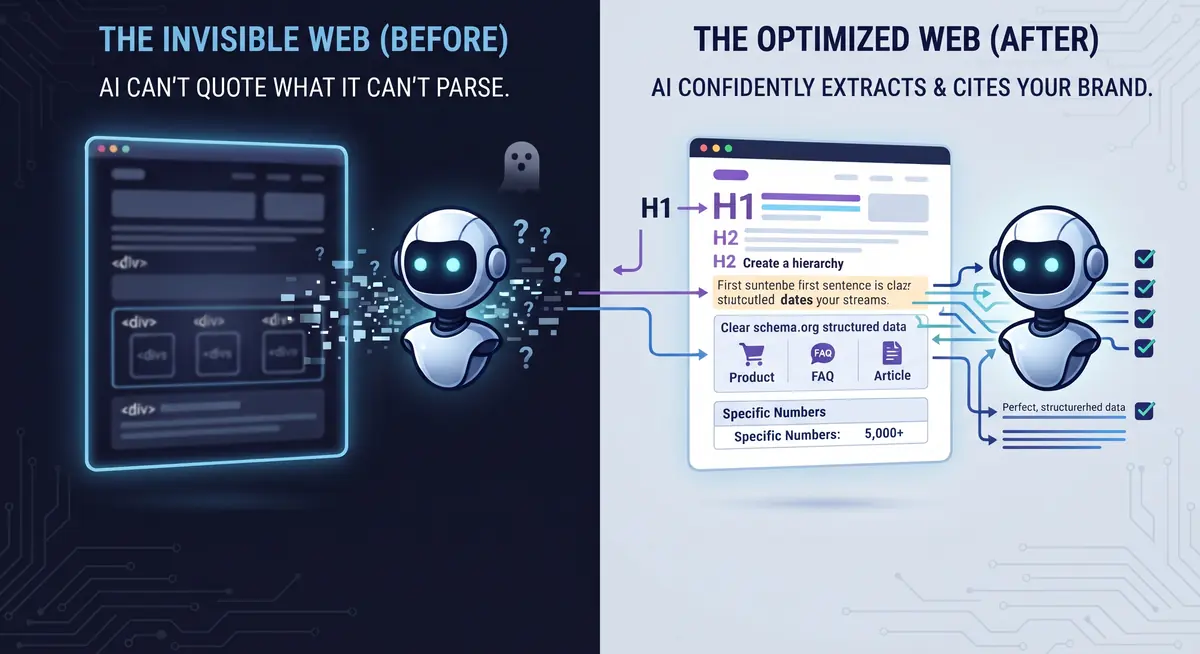
Bottom line: A growing share of product research happens inside AI agents, not search engines. Lead each page with a one-sentence summary, real heading hierarchy, structured data (Product, FAQ, Article), and specific quotable claims so agents can cite you.
When someone asks an AI assistant "what's the best way to buy X", the assistant doesn't browse your site for joy — it reads it so it can quote and cite it. If your pages are hard to parse, you win nothing, even when you'd have ranked in the old search results.
Two audiences, one page
Your website now needs to answer for two readers at once: humans who skim, and models that extract. The good news is the same fixes serve both. Clear structure, honest claims, and scannable answers satisfy a real visitor and make an agent confident enough to recommend your page.
The practical checklist
- Lead each page with a one-sentence summary — the most quotable sentence is the first one
- Use real heading hierarchy (one H1, logical H2s) instead of styled divs
- Add structured data:
Product,FAQ, andArticleschema cost nothing and make facts explicit - Write plain, specific claims — a concrete, checkable statement beats vague marketing language
- Keep key pages server-rendered and indexable; don't hide content behind client-side-only renders
Why this is a business decision
Research habits are shifting faster than most marketing funnels are updating for them. Treating "AI visibility" as part of your SEO budget isn't a trend-chase — it's insurance that your brand stays quotable as discovery keeps moving off the classic search result page.
Want your site ready for agents? I build and retrofit sites for exactly this. Start a conversation →